
GUIDES
Washed vs Natural vs Honey — Coffee Processing Methods Explained

QUICK ANSWER
Three main processing methods turn coffee cherries into green beans: washed (clean, bright, classic), natural (fruity, fermented, wild), honey (sweet, sticky, between the two). Same farm, three processes = three different cups.
✅ Tested by Amr Taha · Brew Tech Reviewer · The Corner Bundle
Two coffees from the same farm, same variety, same harvest can taste totally different. The difference is processing — what happens between picking the cherry and shipping the bean.
Why processing matters more than people think
A coffee cherry is a fruit. The bean is the seed. Between picking and roasting, the fruit needs to come off the seed. How that happens — and how long the bean sits with the fruit — defines the flavor more than almost anything else.
The 3 main methods
Washed (a.k.a. Wet Process)
The cherry is pulped, then the bean is fermented in water for 12–48 hours, then washed clean of all fruit residue, then dried.
- Result: Clean, clear, bright. Acidity stands out.
- Common in: Ethiopia (Yirgacheffe), Colombia, Kenya
- Best for: Filter methods (V60, Chemex), where you want clarity
- Flavor markers: Citrus, floral, tea-like, clean finish
Natural (a.k.a. Dry Process)
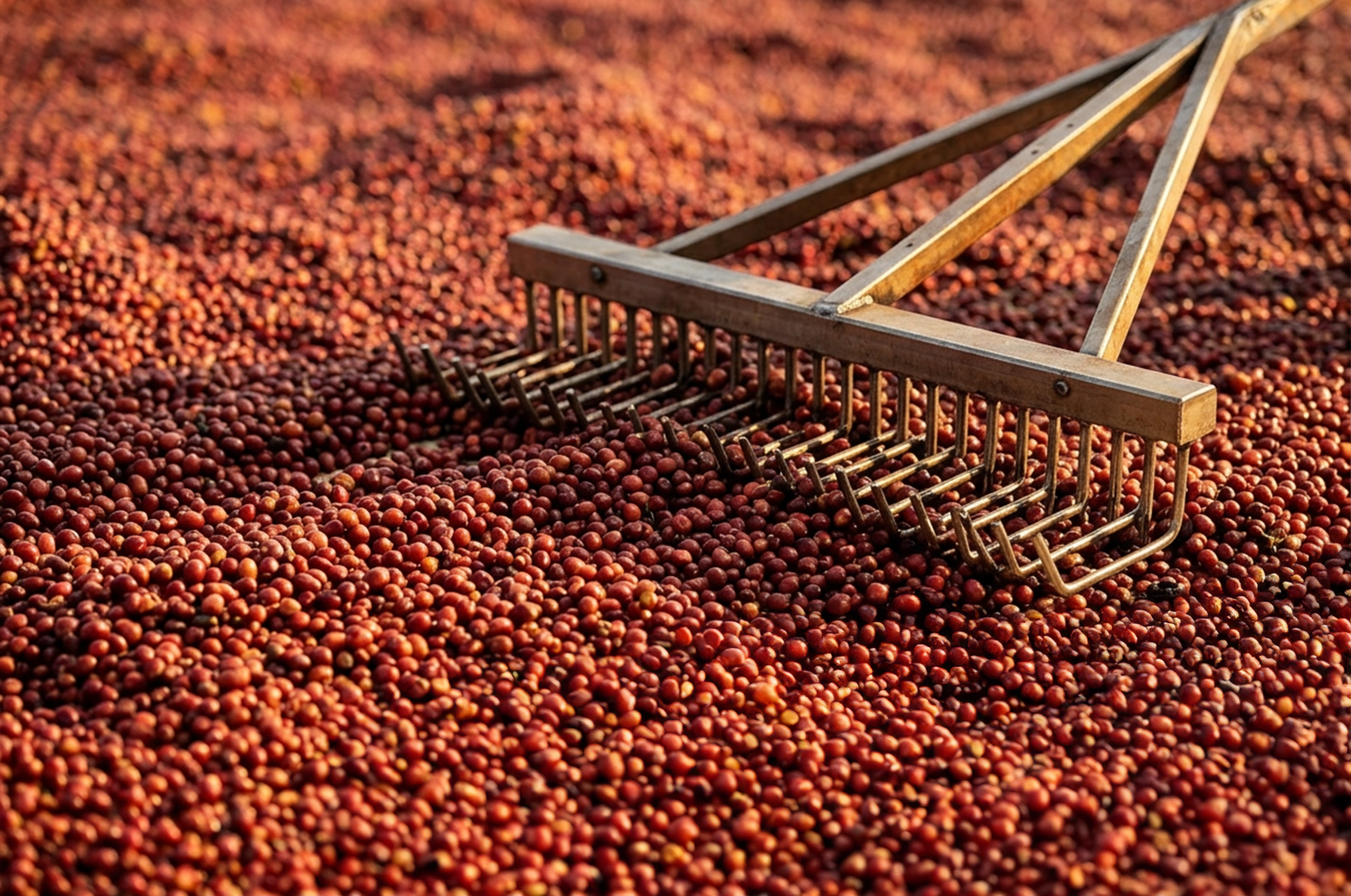
The whole cherry — fruit and all — is laid out to dry in the sun for 2–6 weeks. The bean ferments inside the fruit. Then the dried fruit is removed.
- Result: Heavy, fruity, fermented, sometimes wild
- Common in: Ethiopia (lower elevations), Brazil, Yemen
- Best for: Espresso, milk drinks, when you want jammy fruit notes
- Flavor markers: Berry, jam, wine, fermented fruit
Honey (a.k.a. Pulped Natural / Semi-Washed)
The cherry is pulped (skin removed) but the sticky mucilage layer is left on the bean during drying. The mucilage is sometimes called “honey” for its color and stickiness.
- Result: Sweet, balanced, often described as “between washed and natural”
- Common in: Costa Rica, El Salvador, Brazil
- Best for: Versatile — works in espresso, filter, and milk
- Flavor markers: Honey, brown sugar, stone fruit, balanced acidity
Honey processing has sub-categories based on how much mucilage stays:
- White honey → most removed → cleaner
- Yellow / Red honey → some retained
- Black honey → most retained → fruitiest
Side-by-side comparison
| Washed | Natural | Honey | |
|---|---|---|---|
| Cleanliness | High | Lower | Medium |
| Sweetness | Medium | High | Highest |
| Body | Lighter | Heavier | Medium |
| Acidity | Pronounced | Muted | Balanced |
| Defect risk | Low | High (more variability) | Medium |
| Best brew | Filter | Espresso, milk | Anything |
Newer processes worth knowing about
- Anaerobic — fermented in sealed tanks without oxygen. Wild flavors, often divisive.
- Carbonic Maceration — borrowed from winemaking. Whole cherries fermented under CO2 pressure.
- Lactic / Yeast Inoculated — controlled fermentation with specific microbes for specific flavors.
These are rare in Egypt’s market right now but appearing more in specialty bags.
Common questions
Which process is best?
None. They produce different cups. Match the process to your mood and brew: washed for a crisp morning V60, natural for a fruity espresso, honey when you want both.
Why is natural process risky?
The cherry fruit ferments around the bean during 2–6 weeks of drying. Without careful management, it can develop off-flavors (mold, vinegar, alcohol). When done well, it’s spectacular. When done badly, it’s terrible.
Does processing affect caffeine?
Negligibly. Caffeine content is determined by the bean variety, not the process.
Related guides
- How to Read a Coffee Bag Label
- Single Origin vs Blend
- Iced Strawberry Latte — using natural-process Ethiopian