
GUIDES
Coffee Cupping Scores: What ’86 Points’ Actually Means

QUICK ANSWER
SCA cupping scores rate coffee from 0 to 100. 80+ is ‘specialty grade.’ 86+ is ‘outstanding.’ 90+ is rare and expensive. Scores are out of 10 across 10 attributes (aroma, flavor, body, etc.) — added up gives the total.
✅ Tested by Amr Taha · Brew Tech Reviewer · The Corner Bundle
If a bag says “86 cupping score” — what does that mean, and is it worth the EGP 600? Here’s the system that decides which beans even count as specialty.
The SCA scoring system
The Specialty Coffee Association (SCA) created a standardized cupping protocol in 1985. Trained Q-Graders (certified coffee judges) score every coffee on 10 attributes, each worth 10 points:
| # | Attribute | What it measures |
|---|---|---|
| 1 | Fragrance/Aroma | The smell of dry grounds and wet coffee |
| 2 | Flavor | The combined taste + aroma |
| 3 | Aftertaste | What lingers after swallowing |
| 4 | Acidity | Brightness, liveliness, ‘spark’ |
| 5 | Body | Mouthfeel, weight, texture |
| 6 | Balance | How attributes complement each other |
| 7 | Sweetness | Pleasant sweetness perception |
| 8 | Clean Cup | Absence of defects |
| 9 | Uniformity | Consistency across multiple cups |
| 10 | Overall | The judge’s overall quality impression |
Total: 100. Every coffee starts at 100 and points are deducted for defects.
The score thresholds
| Score | Category | What it means |
|---|---|---|
| <80 | Commercial / commodity | Not specialty grade. Most supermarket coffee. |
| 80–84.99 | Good specialty | Decent quality. Most café and grocery specialty coffee. |
| 85–89.99 | Outstanding specialty | Notably high quality. The Corner Bundle’s typical floor. |
| 90–94.99 | Outstanding (rare) | Top-tier farms, careful processing. EGP 800+/250g territory. |
| 95+ | Exceptional | Auction lots. Geisha. Hundreds of dollars per kilo. |
Why scores aren’t everything
A score is one snapshot of one batch under one set of conditions. A few things scores don’t tell you:
- Roast date — an 88-point coffee roasted 3 months ago tastes worse than an 84-point coffee roasted yesterday
- Personal preference — an 87-point natural Ethiopian might not match your taste; an 84-point washed Brazilian might
- Brew method match — high-scoring light roasts can be wasted on a moka pot
How cupping actually works
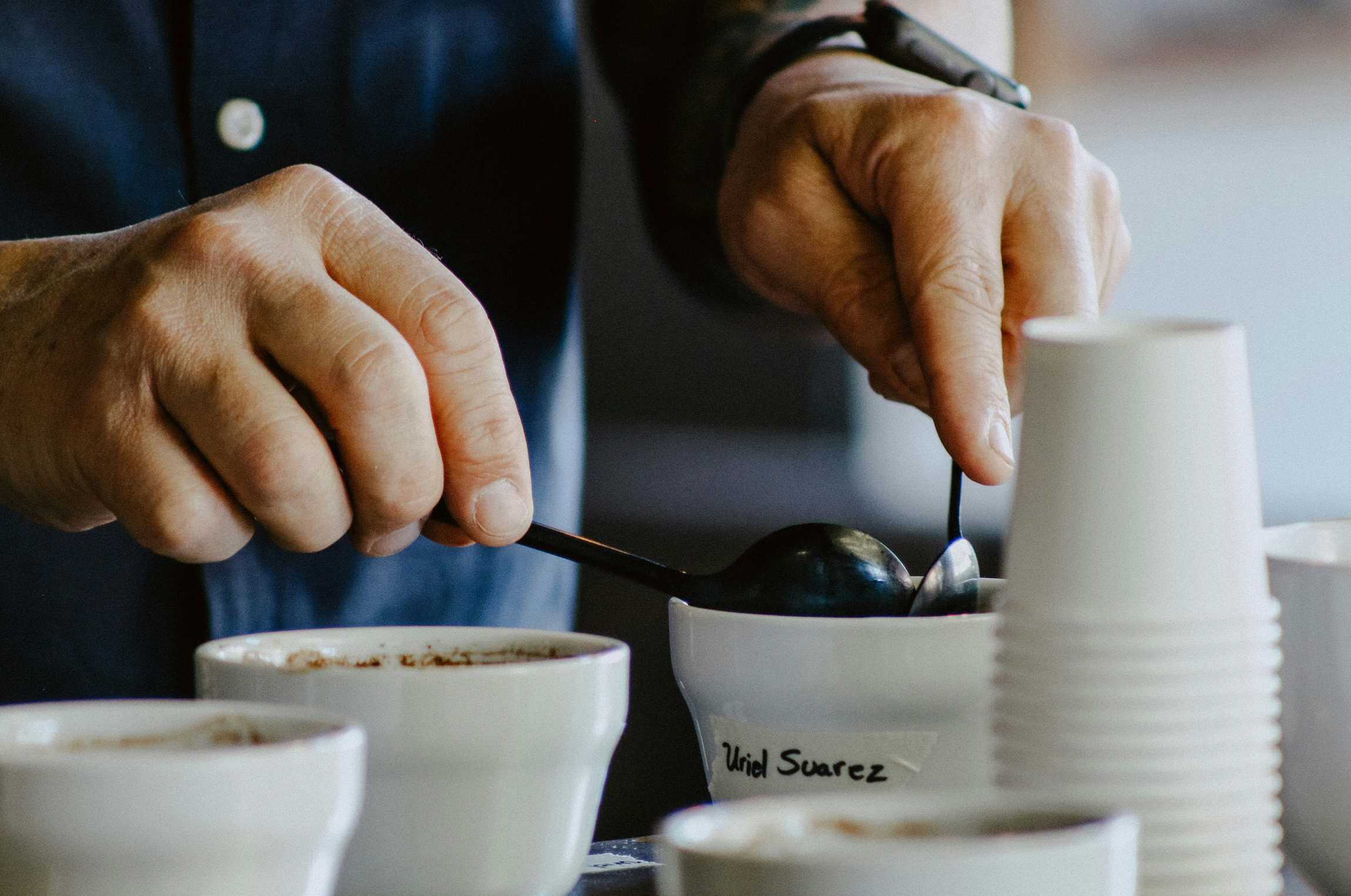
If you ever want to taste like a Q-Grader:
- Grind 8.25g coffee into a 150ml cup (1:18 ratio)
- Smell the dry grounds (fragrance)
- Pour 93°C water, let steep 4 minutes (wet aroma)
- Break the crust with a spoon (intense aroma release)
- Skim foam off
- Slurp loudly from spoon (aerates the coffee, hits all taste receptors)
- Score each attribute, deduct for defects
Common questions
Is an 86 always better than an 84?
Statistically yes. In your specific cup, not always. A fresh 84 from a good roaster can outperform a stale 86.
Who decides the score?
A licensed Q-Grader, certified by the Coffee Quality Institute. Egypt has a small but growing number; Cairo Coffee Collective is the only CQI-accredited lab in Egypt.
Why don’t cheap coffees have scores?
Scoring is voluntary and costs money. Commodity-grade coffees rarely bother. Specialty roasters often score and publish.